
>>> 🐧NEW ONE WBA 2026 🐧<<< 1DA/CH070 – Basilica of San Sebastiano (by 1DA086 Carmelo.)/ 1 PTS (H)/2 PTS (A) / DATE: 17 to 18 january 2026 start @ 07.00 UTC / Freq. stay tuned on WhatsApp SIBA news / PROVINCE 089 (Siracusa)/ Municipality F107 (Melilli)
ANT: 1 EL. DELTA LOOP / PW 100W
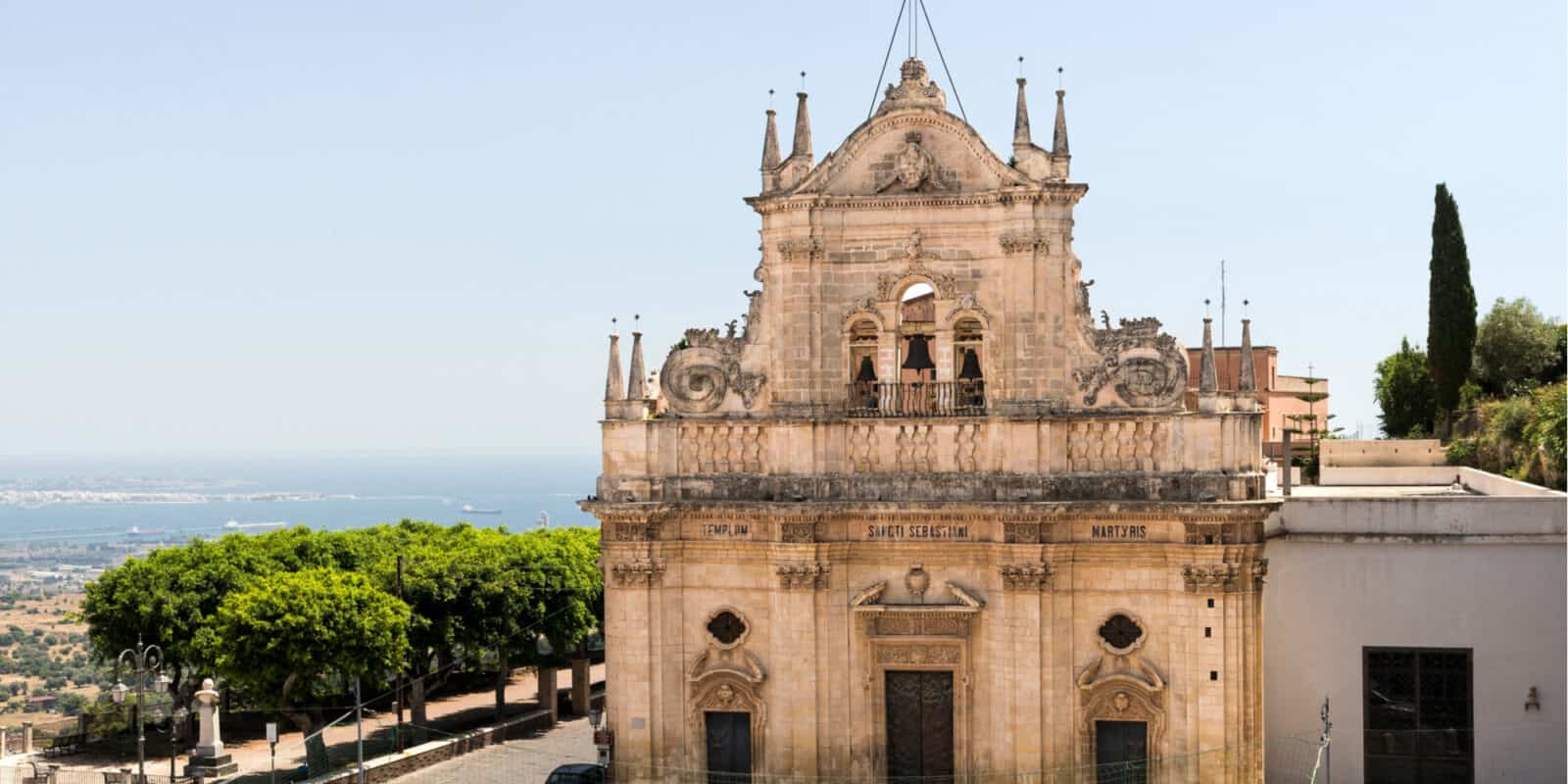
The history of the Basilica: Legend has it that, in 1414, the people of Augusta found a heavy chest containing a simulacrum, apparently lost by a passing ship. They tried to take it with them to Augusta, but failed, because the load was too heavy. After several attempts, the people of Melilla managed to take the simulacrum with them, as if it wanted to go with them. The people of Melilla then built the first church for San Sebastiano, with the façade facing north, which was however completely destroyed by the earthquake of 1693, from which only the simulacrum of San Sebastiano remained intact. Of the original construction built a short distance from the rock site of the Grotta della Carcarella, located behind the current church, only the columns that were part of the structures of the parish rectory have survived. In 1718, part of the structures were built by Girolamo Palazzotto. On December 13, 1990, with the Santa Lucia earthquake or Carlentini earthquake of 1990, the structures are subject to maintenance and restoration work. The facade of the Church The churchyard with geometric-floral motifs of high artistic value is connected to the street level by two stone steps, adjacent to the structures located on the right side, close to the hill, where the monumental Loggia begins. The church has a monumental Baroque-style facade, divided into three parts. On each of these parts stands out the writing: “TEMPLVM – SANCTI SEBASTIANI – MARTYRIS”. At the top we can find the three bells of the basilica. A real spectacle. The main portal features a scene of martyrdom using arrows, while the minor entrances are distinguished by the presence of the Symbols of martyrdom: arrows, palm (martyrdom) and crown (fidelity). Interior Latin cross plan divided into three naves by pillars, seven bays with round arches on each side, two lateral apses without a transept. The vault of the main nave is embellished with pictorial apparatus created between 1759 and 1763 by Olivio Sozzi: Glory of Saint Sebastian and the Blessed Virgin mediator of all Graces, two medallions depicting the Triumph of Faith and Peace and Justice, paintings on canvas applied to the wood of the ceiling. On the edges four tempera paintings depicting the cardinal virtues: Prudence, Justice, Fortitude and Temperance. The domes of each individual lateral chapel are covered with tempera paintings depicting the Virtues: left nave the allegories Fortitude, Virginity, Devotion, Mercy, Purity and Obedience. Right nave: Humility, Divine Grace, Faith, Constraint, Chastity, Victory and Constancy Main altar The elevation of the versus Deum altar is made up of a pair of twin columns surmounted by Corinthian capitals supporting superimposed and broken tympanums, inside the depiction of the symbols of martyrdom: Crown and Palms. On the tops of the tympanum are placed the two statues depicting Faith and Fortitude. On the altar frontal is the depiction of the Pious widow Irene who heals the wounded Saint Sebastian, a marble work by the Palermo sculptor Ignazio Marabitti. In the central aedicule is placed the painting depicting the Martyrdom of Saint Sebastian, a copy of the original by Olivio Sozzi destroyed in 1946, a work by Giovanni Valenti from Niscemi 1992. The painting hides the niche where the statue of the two-martyr is placed. The venerated simulacrum is unveiled during the two cycles of liturgical celebrations. https://fondoambiente.it/luoghi/basilica-di-san-sebastiano-martire?ldc.
Are you in the Log? Click below.
| LOG |

 WBA - HOME PAGE