

>>> 🐧NEW ONE SIBA 2025 🐧<<< 1DA/CT038 (Dionysian Walls) (by 1DA086 Carmelo)/ 3 POINTS / DATE: 06 june 2025 start @ 07.00 UTC UTC/ Freq. stay tuned on WhatsApp SIBA news / PROVINCE 089 (Siracusa)/ Municipality I754 (Siracusa)
ANT: 1 EL. DELTA LOOP / PW 100W
The Dionysian Walls were built by the tyrant Dionysius I to defend Syracuse and the nearby Epipoli plateau, a key strategic point for controlling the territory. In the 5th century BC, in fact, Syracuse had entered into war with Athens and the long siege of the city had highlighted the weakness of the defensive system and the strategic importance of the Epipoli plateau for controlling land access to Syracuse. After the war, in 406 BC the tyrant Dionysius (or Dionysius, also famous for the legend of the ear of the same name in the archaeological park of Neapolis) came to power and, before undertaking his hegemonic policy of opposition to the Carthaginian enemy, stationed in western Sicily, he decided to equip the city with a formidable defensive system. The Dionysian Walls represent one of the most impressive defensive works built in the Greek world. Although the ancient route and exact length are not known with certainty, the walls of Syracuse probably had a perimeter of no less than 27 km, enough to encompass the pentapolis, as Syracuse was called for its five districts (Ortigia, Akradina, Tyche, Neapolis and Epipoli), and a vast area of agricultural land to be exploited for subsistence in the event of a prolonged siege.
Various ancient authors tell us about the construction of the Dionysian walls and Diodorus Siculus informs us that 60,000 workers and 6,000 pairs of oxen were employed. The work was divided into several lots that were worked on simultaneously and the tyrant Dionysius encouraged and rewarded the most industrious teams. The defensive system, in addition to the walls, consisted of towers and forts at regular intervals and culminated at the farthest end from the city with the formidable Eurialo castle. The city walls also included numerous small posterns and some large monumental gates located along the main roads leaving the city such as the Via Elorina which led to the sub-colony of Eloro. The most formidable of the gates was on the northern side and was called Hexapylon because of its six entrances.
The fortifications were built using blocks of local limestone and to limit transport times numerous small open-air latomies were built, quarries from which to extract building material. Even today the city of Syracuse, despite having grown a lot in size since the times of the ancient Greek polis, is entirely contained within the perimeter of the Dionysian walls. Over the centuries, unfortunately, much of the walls have been dismantled in order to reuse the building material but traces of them can still be seen in various parts of the city. Although the Dionysian Walls Park, dreamed of in the early 2000s, is still a utopia, through some walks the tourist or the Syracusan curious about his own history will be able to find the traces of this extraordinary defensive work. Occasionally the Hermes Sicily Tours tourist guides also offer guided tours that allow you to admire part of the ancient walls. https://www.hermes-sicily.com/blog/8-siti-archeologici-siciliani/307-siracusa-mura-dionigiane
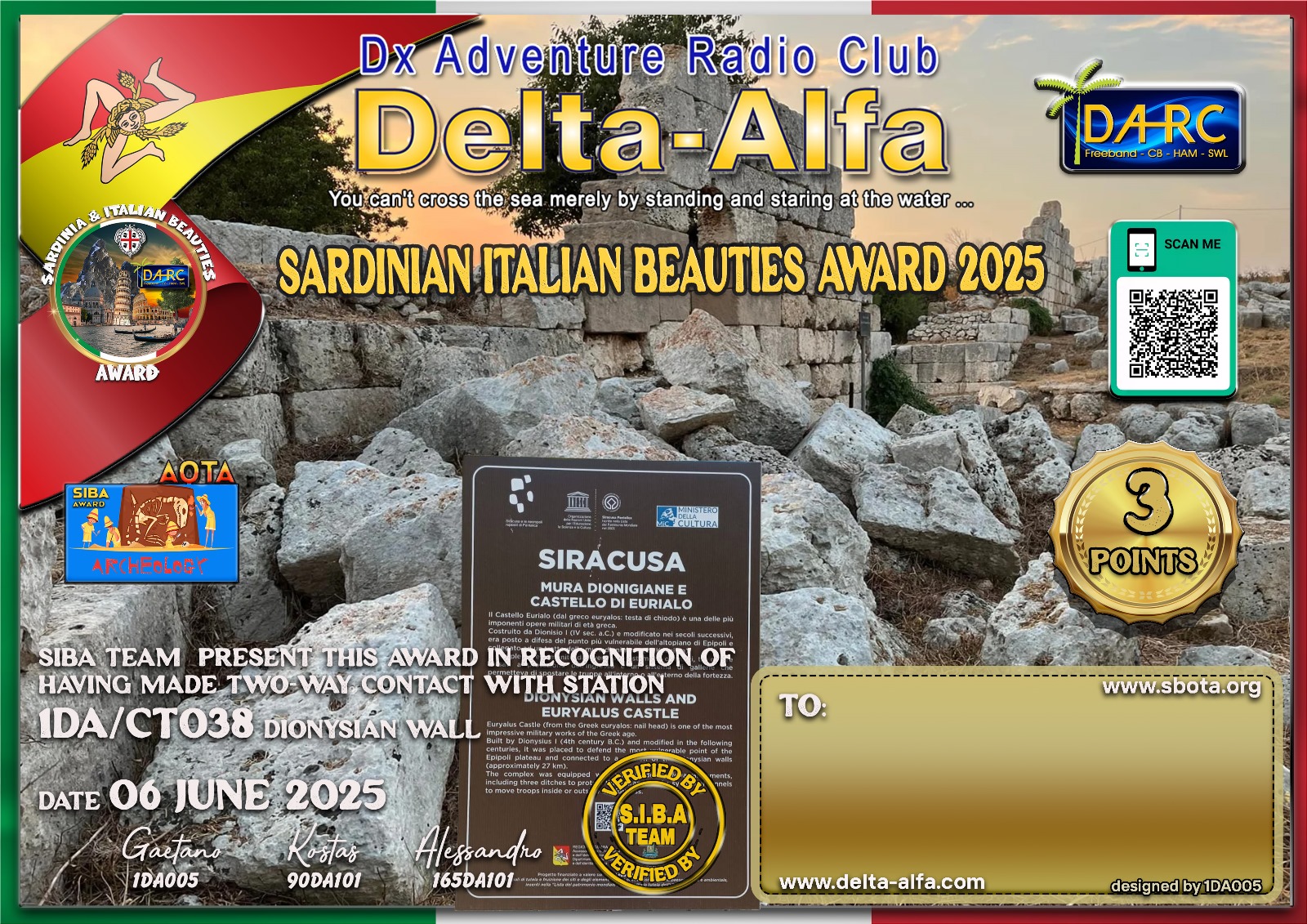
Are you in the Log? Click below.
| LOG |
| 14AT661 Gérard 30RC13 Fran 14DA20 Pascal 15OI68 Jean Luc 14CI312 Cesar 14DA70 Franck 14AT177 Manu 14AT292 Bernard 13AT285 Tommy 1RIR5 Dario 14PAT928 Bruno 14SD501 Hervé 14AT16 Bruno 14GC205 1AT562 Antonio 14AT371 Michel 161DA135 Sylvester 14AT417 Bernard 26AT155 Marcus 19LR1 Ger 26AT169 Bill 14AT47 Yohann 26DA10 Scott 14DA496 Marino 1EK156 Mauro 14DA62 Gérard 14DA26 Nicholas 14AT145 Philippe 19AT515 Ron 13AT217 Tino 14AT23 Jean Marc 13SD208 Wolf 1RC118 Vittorio 1AT485 Riccardo 14AT75 Georgette 47PL122 Arne 14AC1 Eric 161DA15 Janusz 165PAT104 Pierpaolo 14CI101 Olivier 1AT474 Christian 13AT13 Steve 13IR74 Daniel 1DA6 Sergio 26AT16 Paul 14IF949 Jean Marc 1RC176 Terry 14RC65 Didier 1RC111 Gabry 14PZ59 Damien 14AT824 Philippe 14AT832 Christian 14EX25 Francis 16RC249 Olivier 26AT95 David 14SA27 Pascal 14WDM51 Florent 1AT14 Vincenzo 1AT993 Piergiacomo 14VD428 David 1DA5 Gaetano 26RC402 Tom 14DSC1 David 1SA180 Giacomo 1AT127 Luciano 1AT227 Livio 1SA200 Massimo 14RC82 Seb 13LR741 Nico 31AT183 Nuno 1AT1692 Willi 14OK10 Eric 14DA78 Fabrice 14AT139 Alain 1FRI747 Dario 14AT287 Reynald 14PAT1191 Manuel 1DA7 Darek 1AT682 Giuliano 1AT932 Antonio 14AT197 Philippe 13AT715 Pete 1SD100 Adriano 1GIR476 Marco 30DA21 Andoni 1PL1 Lino 1PC74 Mattia 14TW207 Jean Pierre 1KPI107 Fabrizio 1WR380 Giorgio 1AT771 Marco 1AT289 Fabio 14SD177 Jean Pierre 14EK19 Stéphane 14EK24 Christian 30DA202 Javier 26AT82 Mark 14TW670 Pascal 1RGK192 Amedeo 1AT1602 Franco 161IR112 Pawel 14EK114 Jean Claude 14AT201 Farid 1AT586 Franco ——————————– 14AT661 30RC013 14DA020 15OI068 14CI312 14DA070 14AT177 14AT292 13AT285 1RIR005 14PAT928 14SD501 14AT016 14GC205 1AT562 14AT371 161DA135 14AT417 26AT155 19LR001 26AT169 14AT047 26DA010 14DA496 1EK156 14DA062 14DA026 14AT145 19AT515 13AT217 14AT023 13SD208 1RC118 1AT485 14AT075 47PL122 14AC001 161DA015 165PAT104 14CI101 1AT474 13AT013 13IR074 1DA006 26AT016 14IF949 1RC176 14RC065 1RC111 14PZ059 14AT824 14AT832 14EX025 16RC249 26AT095 14SA027 14WDM051 1AT014 1AT993 14VD428 1DA005 26RC402 14DSC001 1SA180 1AT127 1AT227 1SA200 14RC082 13LR741 31AT183 1AT1692 14OK010 14DA078 14AT139 1FRI747 14AT287 14PAT1191 1DA007 1AT682 1AT932 14AT197 13AT715 1SD100 1GIR476 30DA021 1PL001 1PC074 14TW207 1KPI107 1WR380 1AT771 1AT289 14SD177 14EK019 14EK024 30DA202 26AT082 14TW670 1RGK192 1AT1602 161IR112 14EK114 14AT201 1AT586 |

 WBA - HOME PAGE