
>>> 🐧NEW ONE SIBA 2025 🐧<<< 165DA/NU071 Santuario prenuragico Monte d’Accoddi (by 165DA101 Alex) / 3 POINTS./ DATE: 02 march 2025 start @ 09.00 UTC / Freq. 7️⃣0️⃣5️⃣ SPLIT +10 Khz UP / PROVINCE 312 (Sassari) / Historical Region HR24 (Sassarese) / Municipality Sassari (I452).
ANT: SKYPPER / PW from 200 to 400W
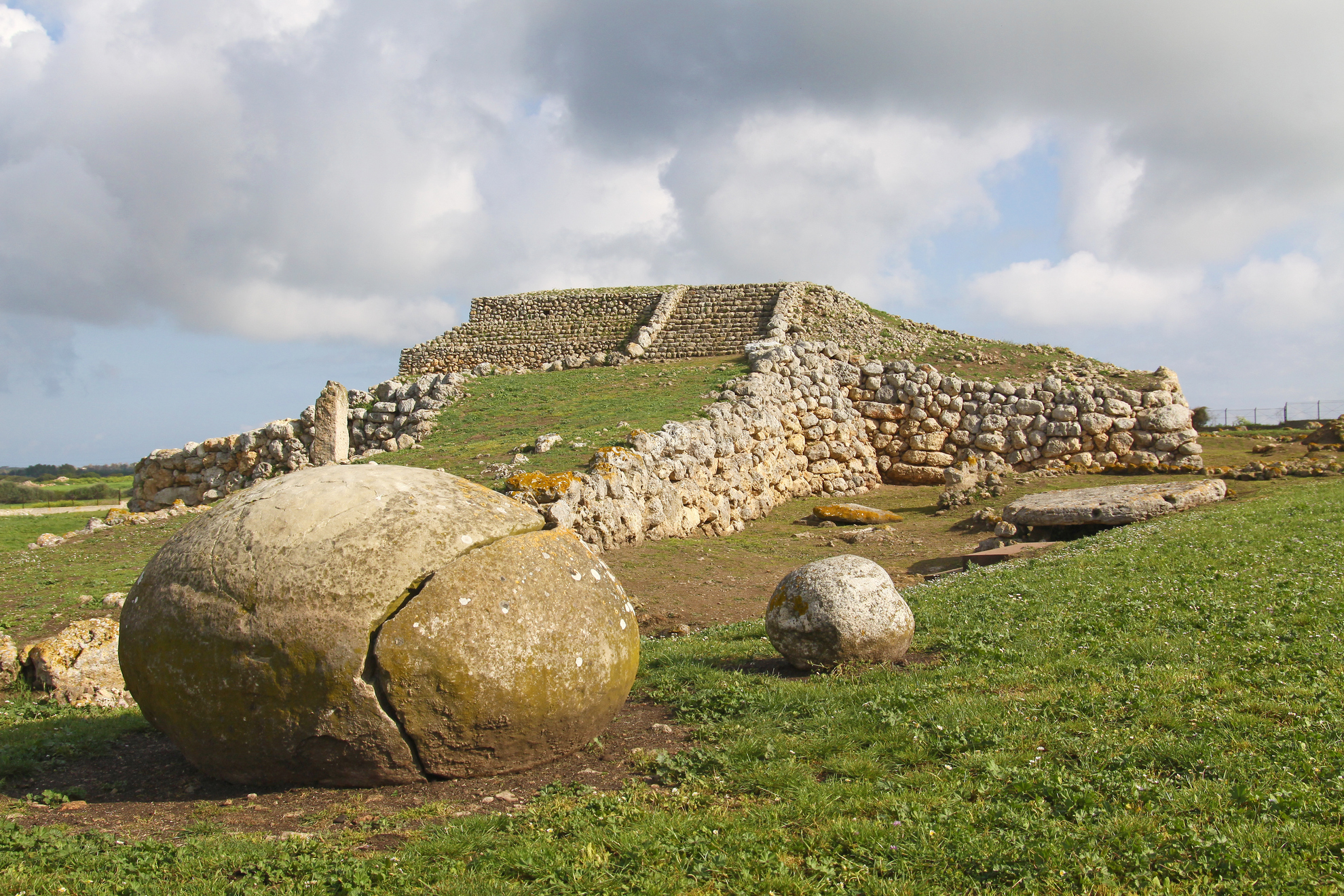
A unique monument in the Mediterranean basin, this most sacred expression of pre-Nuragic civilisation is just a few kilometres from Sassari in the island’s northwest Although there is no direct relationship, it is identical to the contemporary Mesopotamian temples and embodies the ‘oriental’ creed of the union between heaven and earth – the sacred areas on top of reliefs were considered the meeting point between man and divinity. The temple of Monte d’Accoddi (from the archaic kodi, ‘stone’), dating back five thousand years, is a ziqqurat that is unique in Europe due to its singularity of architectural types. It was discovered in the mid-20th century, digging into a small hill that appeared to be ‘artificial’, rising up in the middle of a plain. In fact, it was a pyramid altar covered with earth, perhaps dedicated to a female deity, carved in a granite stele alongside the monument. According to legend, it was built by a prince-priest who had fled from the Middle East. It had one very special feature: the ziqqurat is the temple of the Sun, in turn dedicated to the Moon.
The pre-Nuragic sanctuary stands in the centre of Nurra, along the ‘old’ State Highway 131 (heading towards Porto Torres), in the territory of Sassari, eleven kilometres from the capital of the north of the island. The monument played a central role in society of the time, being the culmination of the evolution of a complex developed from the second half of the 4th millennium BC. The altar is the superimposition of two phases, that of the ‘red temple’, in the final Neolithic period (3500-2900 BC), and the following ‘terraced temple’, in the Aeneolithic period (about 2700 BC), as part of the Abealzu-Filigosa culture. In the first phase, several villages of quadrangular huts were part of a ceremonial hub, including a Domus de Janas necropolis and alongside the Santuario, in their original positions, are an elongated menhir (four and a half metres high), an enormous slab with seven holes (perhaps use to tie up victims) and boulders of spheroidal stone, one of five metres in circumference. All the stones served a specific purpose in the sacrificial rituals. At the end of the final Neolithic period, the people of the Ozieri culture built a platform in the shape of a pyramidal trunk, with sides at the base extending 27 metres, above which stood a rectangular room with surfaces plastered and painted in ochre and traces of yellow and black. Of the sacred area remain the floor and remnants of a perimeter wall. Around 2800 BC, the structure of the ‘red temple’, abandoned for about two centuries, was buried under a colossal filling of earth, stones and limestone marlstone, in turn ‘covered’ with large blocks of stone. A new large terraced pyramidal platform was built, with sides longer than the previous one and accessible from a ramp that was forty metres long and thirteen to seven metres wide. The second sanctuary is reminiscent of the ziqqurat with an ‘open-air’ altar. The structure occupies 1,600 square metres, rising up almost six metres (originally perhaps eight). Inside is an unexplored room. Perhaps, as in Mesopotamia, it contains the sacred bed where the ritual of regeneration of life and fertility of the earth was carried out. Around are the remains of a village, where ceramics were found almost intact. To be admired are finds safeguarded in the Sanna archaeological museum, along with a model of the altar in its earliest form. The building retained its religious function for a millennium. At its base, remains of sacred meals and objects used in propitiatory rituals were discovered. The site was abandoned at the beginning of the ancient Bronze Age (1800 BC) and occasionally reused for burials. https://www.sardegnaturismo.it/en/explore/tempio-altare-di-monte-daccoddi . . .
Are you in the Log? Click below.
| LOG |
| 1AT562 19AT515 1LR119 165AT448 34AT192 14AT222 34AT116 56TR277 2AT715 29AT038 14DA496 1PAT198 20EK020 14DA017 14GT044 34ASM078 1AT932 11AT121 34VAG379 56SD106 14DA026 34RC024 14AT824 34DA101 26AT016 1AT771 13AT285 13AT715 14RA041 9AT092 5RC024 14SR117 1AT014 30DA010 14AT145 9BC235 14PAT928 1AT289 1PC074 1AT682 9AT124 1AT227 1DA006 14EM011 14AT016 14SD501 14AT371 31AT347 14AT023 16AT128 104DX104 14AT114 14CI177 20LV555 56AT108 26AT023 20RC001 14AT224 161DA135 14DA020 14GT054 14DA062 14AT292 1GIR453 9AT193 26NB352 1ALE013 108AT046 24EK011 56DX113 91AT109 19RC001 14AT177 29LR049 20LR117 3AT303 1LR011 13IR121 68AT121 20LA314 196SD001 1AT1963 56LR555 31RC688 1AT586 10AR001 23SD101 13WM019 14AT047 9ON117 3DA010 5AT131 56KPI101 165PAT104 3VS009 1AT127 3SD256 1EK156 14EK011 14AT029 14DA041 29AT104 14AT661 1SD230 108AT041 13LR021 14SD213 13IR100 1SD290 26AT022 14SD217 35SSB079 14AT148 1AT1171 1VL063 14DA021 123AT027 1M236 1RIR005 3AT106 9EK945 29AT101 31LR001 19AT371 19LR020 91AT124 14AT350 14DA070 1AT194 31LR198 3DA109 9AT266 65DA/DX (43DA148) 161DA015 153AT181 31AT183 1AT993 1SD303 |

 WBA - HOME PAGE